
I help senior leaders turn complex pay & accumulated wealth into a plan to make work optional | Chartered Financial Planner | Work to Live
February 4, 2026
A Clear Guide to Making Smart Decisions Without Regret
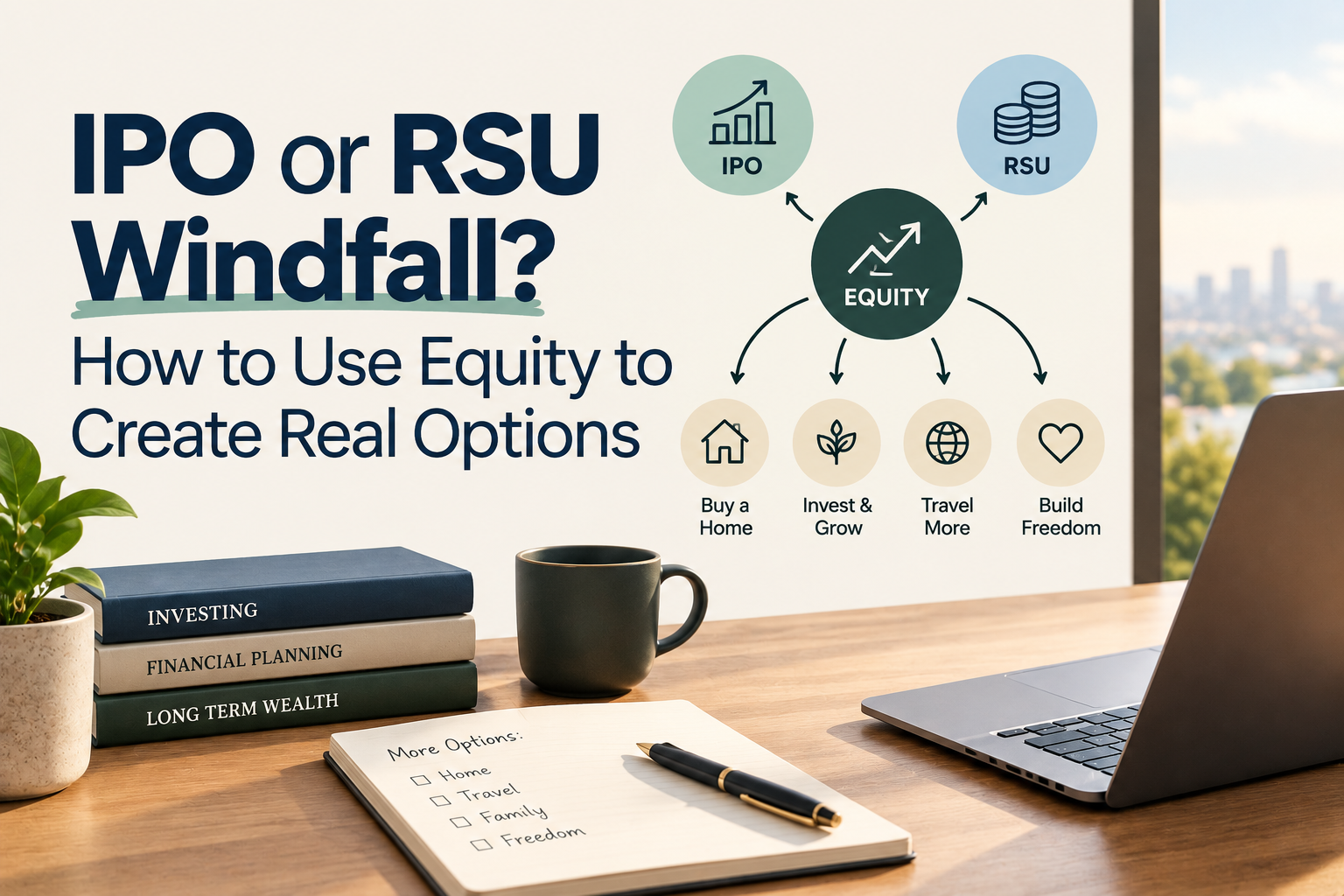
If you are approaching an IPO or receiving RSUs, it is normal to feel uncertain.
For many senior professionals, this is the first time their net worth can change quickly and materially.
Common questions include:
- What should I do with my IPO shares?
- Should I sell my RSUs straight away?
- How much tax will I owe?
- How do I avoid making a costly mistake?
- How does this fit into the rest of my life?
This guide answers those questions in plain English and sets out 10 sensible steps to help you make calm, well-judged decisions.
Quick answers to the most common questions
What should I do with my IPO shares?
There is no single right answer.
It depends on:
- tax
- lock-ups and restrictions
- how much of your wealth is tied to one company
- what you want this money to change in your life
The safest starting point is not to rush. First, understand what you hold, what tax may be due, and what this windfall really means for you.
How are RSUs taxed?
RSUs are usually taxed as income when they vest.
That means:
- income tax and National Insurance are typically due
- you may receive fewer shares after tax is deducted
- holding on increases concentration risk
- There is no Capital Gains Tax if sell immediately.
For this reason, many people sell some or all RSUs when they vest and redirect the money into more balanced plans.
If you hold on to Shares and they increase in value then Capital Gains Tax would be due.
How are EMI options taxed at IPO?
If your options still qualify as EMI:
- there is usually no income tax or NIC on exercise if exercised at or below HMRC value
- gains may qualify for Business Asset Disposal Relief could reduce amount of capital gains tax pay.
This can be very valuable, but only if the scheme still qualifies at the point of exercise.
How do I avoid messing this up?
Three simple principles:
- Do not rush
- Understand the tax before acting
- Make decisions based on your life, not the share price
10 smart steps for handling IPO shares and RSUs
1. Pause before acting
Most mistakes happen when decisions are rushed. Time and clarity reduce regret.
2. Strengthen your foundations
A strong base gives flexibility:
- clear expensive debt
- build a cash buffer
- stabilise monthly cashflow
3. Decide what the money is for
Instead of focusing on shares, ask: What do I want this money to change?
That question matters more than market movements.
4. Turn priorities into a simple plan
Common goals include:
- buying or upgrading a home
- school fees
- reducing work intensity
- creating long-term financial freedom
Put rough numbers and timelines around what matters.
5. Understand tax before touching anything
Know:
- what is taxed as income
- what is taxed as capital gains
- what PAYE may apply
- how timing affects outcomes
Planning based on the gross number often leads to surprises.
6. Learn enough to stay grounded
If this is your first equity event, take time to understand:
- diversification
- volatility
- how emotion affects decision-making
Sudden wealth changes behaviour more than people expect.
7. Reduce over-concentration
Too much wealth tied to one company increases risk.
Selling some shares is not pessimistic. It is a sensible way to protect future options.
8. Avoid trying to time the market
Trying to be clever often causes more harm than being steady.
Make decisions based on your goals, not short-term predictions.
9. Keep things simple
Complex investments and fashionable ideas often destroy windfalls.
Low-cost, diversified approaches tend to work quietly over time.
10. Think long term
An IPO or RSU vest is a moment, not a destination.
The real value comes from how well the money supports your life over the next 10 to 30 years.
Final thought
An IPO or RSU windfall is not just a financial event. It is a life moment.
Handled well, it can create flexibility, control, and real choice without putting the future at risk.
Slow decisions. Clear thinking. Life first.
Need help drop me a DM.
Important information and risk warning
This article is for information only and does not constitute personal financial advice. Tax treatment depends on individual circumstances and may change. Investments can fall as well as rise, and you may get back less than you invest. The Financial Conduct Authority does not regulate tax planning. If you are unsure what is right for you, speak to a qualified professional.


